vendredi 30 décembre 2011

Défi Google Cloud [Nuit de l'Info 2011]

Défi Google Cloud [Nuit de l'Info 2011]

Description du défi

Le but de ce défi est SOIT de réaliser une application App Engine qui mobilise un maximum de puissance de calcul, SOIT de réaliser la meilleure application qui utilise la Prediction API de Google.

Si vous choisissez la prediction API, l'application sera jugée sur sa qualité générale et la pertinence de ses choix techniques.

Si vous choisissez la version “puissance de calcul” du défi, cette puissance sera mesurée en FLOPS sur une durée de votre choix. Il faudra bien entendu être capable de mesurer cette puissance avec une bonne fiabilité, et en convaincre le jury. Le calcul effectué doit également être pertinent d'un point de vue scientifique ou technique et également être adapté au thème général de la nuit (Exemples non pertinents: additionner les chiffres de 1 à N, faire N fois le même calcul, …). Sans rien révéler du thème, je vous conseille de commencer à regarder les algorithmes de datamining. Cette version du défi met l'accent sur la puissance de calcul et il sera acceptable de fournir une application qui ne résout qu'une partie (la partie calculatoire) d'une application plus générale correspondant au thème de la nuit.

La qualité de l'interface utilisateur sera un plus, notamment si elle met en valeur la puissance utilisée de façon originale.

dimanche 25 décembre 2011

And the Winners of the Cyber Challenge Are...

Government Computer News (12/19/11) William Jackson

The SANS Institute and the Common Knowledge Scholarship Foundation recently announced the winners of the most recent U.S. Cyber Challenge, a competition to identify future cybersecurity professionals.  Competitors came from more than 150 U.S. high schools, and the top finishers received more than $6,000 in scholarships.  More significant than the performance of the winners is the fact that more than 2,000 students from 169 schools in 32 states and three territories participated, says (ICS)2 Foundation director Julie Peeler.  "That's a good number of kids who are being exposed to cybersecurity, regardless of whether they go into the profession," Peeler says. "We are at least educating a larger workforce overall to an understanding of cybersecurity issues."  The Cyber Foundation competitions are part of a broader U.S. Cyber Challenge effort that includes summer camps for college, high school, and younger students, the Air Force Association's Cyber Patriot program, and several other scholarship and training programs aimed at developing a future professional cybersecurity workforce.  Launched in 2009, the U.S. Cyber Challenge set a goal of identifying and recruiting 10,000 people with native skills needed for cybersecurity.
http://gcn.com/articles/2011/12/19/cyber-challenge-high-school-winners.aspx

Traditional Social Networks Fueled Twitter's Spread

MIT News (12/21/11) Caroline McCall

Massachusetts Institute of Technology (MIT) researchers studied the growth of Twitter from 2006 to 2009 and found that its initial growth in the United States relied heavily on media attention and traditional social networks based on geographic proximity and socioeconomic similarity.  The researchers examined data from 16,000 U.S. cities, focusing on the 408 with the highest number of Twitter users.  They characterized cities as early adopters, early majority adopters, late majority adopters, or laggards based on when 13.5 percent of the population had Twitter accounts.  "The social network needs geographical proximity," says MIT professor Marta Gonzalez.  "In the U.S., anyway, space and similarity matter."  The researchers found that Twitter's initially popularity was fueled by young, tech-savvy users in San Francisco and Boston.  However, after that it began to follow a more traditional pattern by traveling short distances, which implied that personal interactions were important to its wider use.  "Nobody has ever really looked at the diffusion among innovators of a no-risk, free, or low-cost product that's only useful if other people join you," says MIT graduate student Jameson Toole.  "It's a new paradigm in economics: what to do with all these new things that are free and easy to share."
http://web.mit.edu/press/2011/twitter-growth-research.html

dimanche 18 décembre 2011

openvpn - Documentation Ubuntu Francophone

http://doc.ubuntu-fr.org/openvpn

Pascal Fares added you to his circles and invited you to join Google+

Pascal Fares added you to his circles and invited you to join Google+.
Join Google+
Google+ makes sharing on the web more like sharing in real life.
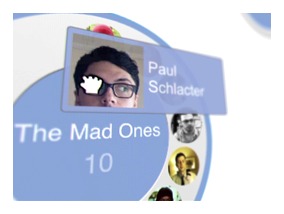
Circles
An easy way to share some things with college buddies, others with your parents, and almost nothing with your boss. Just like in real life.
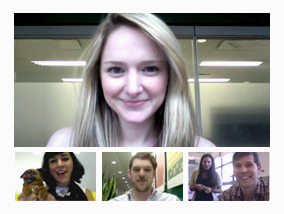
Hangouts
Conversations are better face-to-face. Join a video hangout from your computer or mobile phone to catch up, watch YouTube videos together, or swap stories with up to 9 of your friends at once.
Mobile
Lightning-fast group chat. Photos that upload themselves. A bird's-eye view of what's happening nearby. We built Google+ with mobile in mind.
You received this message because Pascal Fares invited pfares2.technews@blogger.com to join Google+. Unsubscribe from these emails.

SSH_VPN - Community Ubuntu Documentation

This page discusses using SSH to set up SSH-based point to point connections, which can then be used to create routes that create virtual private networks.

Read
https://help.ubuntu.com/community/SSH_VPN

Did Apple's iPhone Redefine Photography?The Next Web

http://thenextweb.com/apple/2011/12/12/did-apple-redefine-photography-with-the-iphone/